Patio builders serving Cape Cod & Plymouth 45 N Main St, South Yarmouth, MA 02664 (508) 348-7461
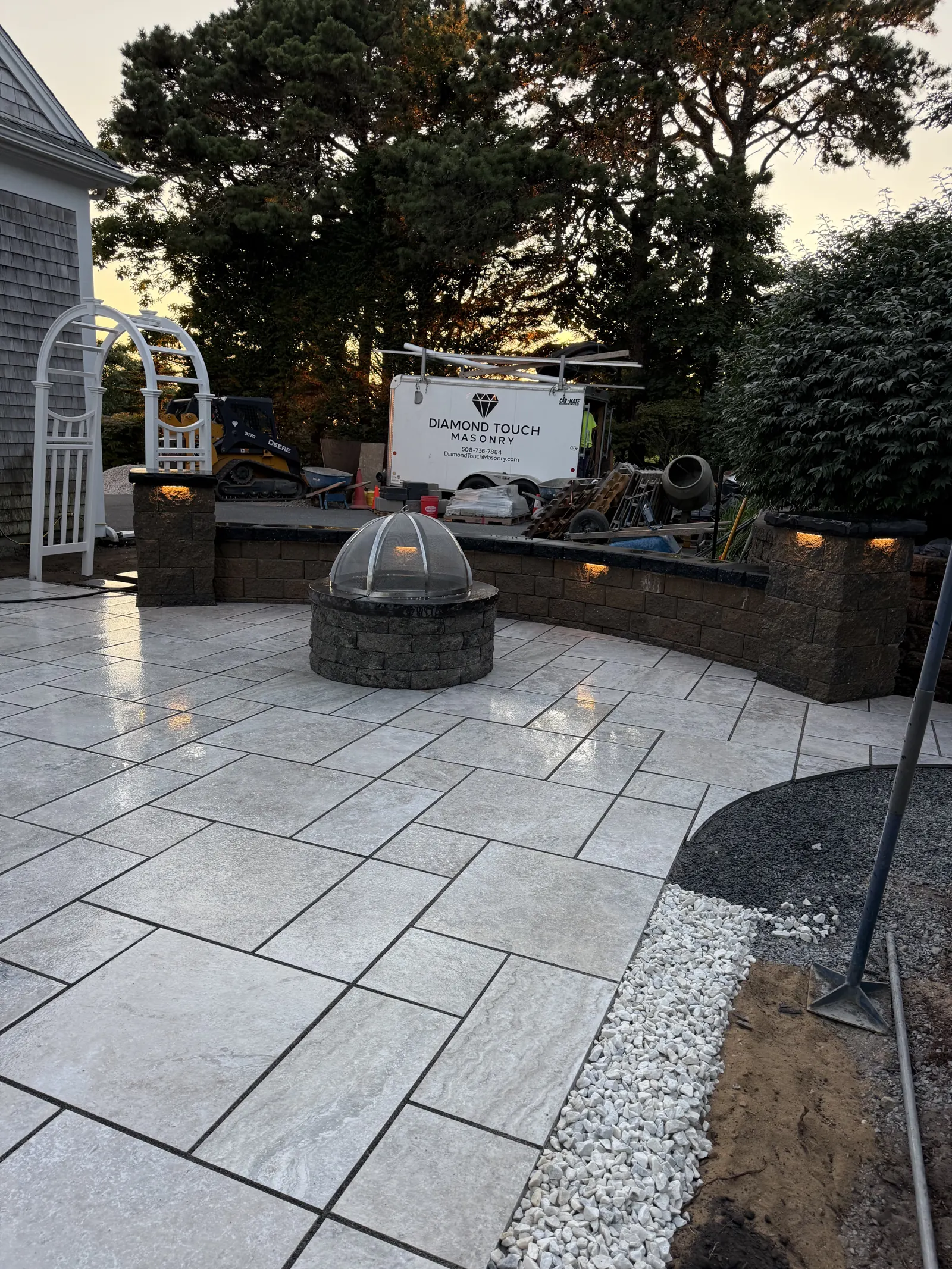
Light gray slab patio with a round fire pit and a lit seat wall at dusk

Cape Cod Patio Builder

Patio Installation Cape Cod Built for Frost and Salt Air

Paver and bluestone patios built on a base that handles sandy soil and freeze-thaw. Free estimates by form or phone.

  • On-site visit to measure and look at grade and drainage
  • Material options explained in plain terms
  • Written estimate, no obligation

Get your free estimate

  • Free on-site estimates
  • Cape Cod based crew
  • Paver & bluestone patios
  • Base built for sandy Cape soil

Most Cape Cod homeowners want a patio that is ready for summer and still looks right after many winters. That takes more than good stone. Sandy soil drains fast but shifts under a thin base. Frost lifts weak spots, and salt air and wet springs are hard on anything poorly set. The building season is short, so planning early matters. Cape Cod Patio Pros builds paver and bluestone patios on a compacted base with drainage planned in. Ask for a free estimate with the form or by calling (508) 348-7461.

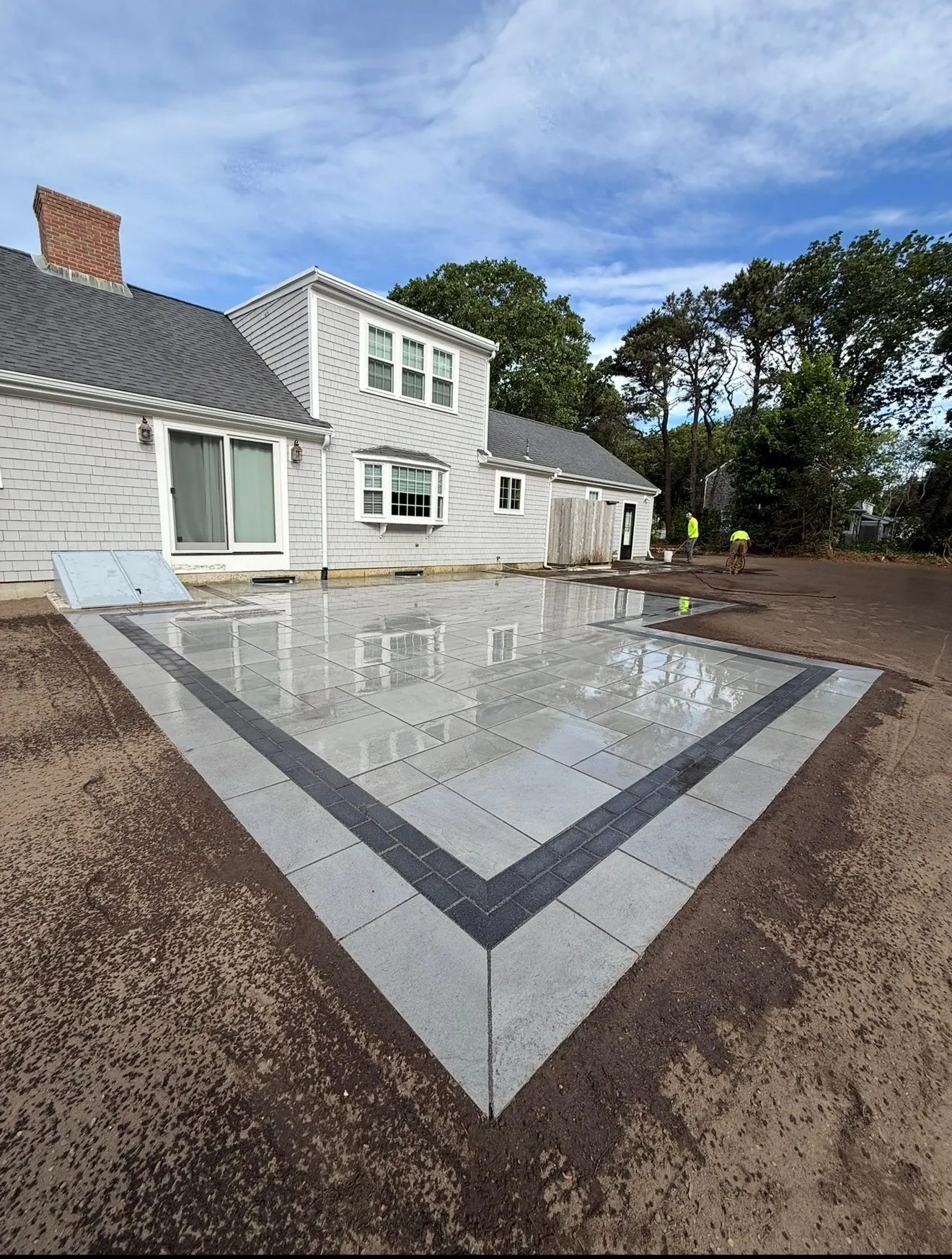
New light gray slab patio with a dark border inlay behind a white house

The difference

Why Cape homeowners call us first

01

Base built for sandy soil

Sandy soil drains well but can shift under a thin base. The excavation removes the soft top layer, and the base goes in compacted layers so the patio stays level.

02

Drainage planned with the patio

Drainage and excavation are part of what Cape Cod Patio Pros does, so water is planned for before stone goes down. Standing water and freeze-thaw are a common cause of patio problems.

03

Features built as one project

Seat walls, steps, walkways, fire pits and outdoor kitchens are all masonry work Cape Cod Patio Pros builds, so the patio and its features are planned together instead of added later.

04

Pavers and bluestone, your choice

Paver and bluestone patios are both built here, so the material is chosen by your yard, your house and how you use the space, not by what one crew happens to install.

Reviews

What Cape homeowners say

What we build

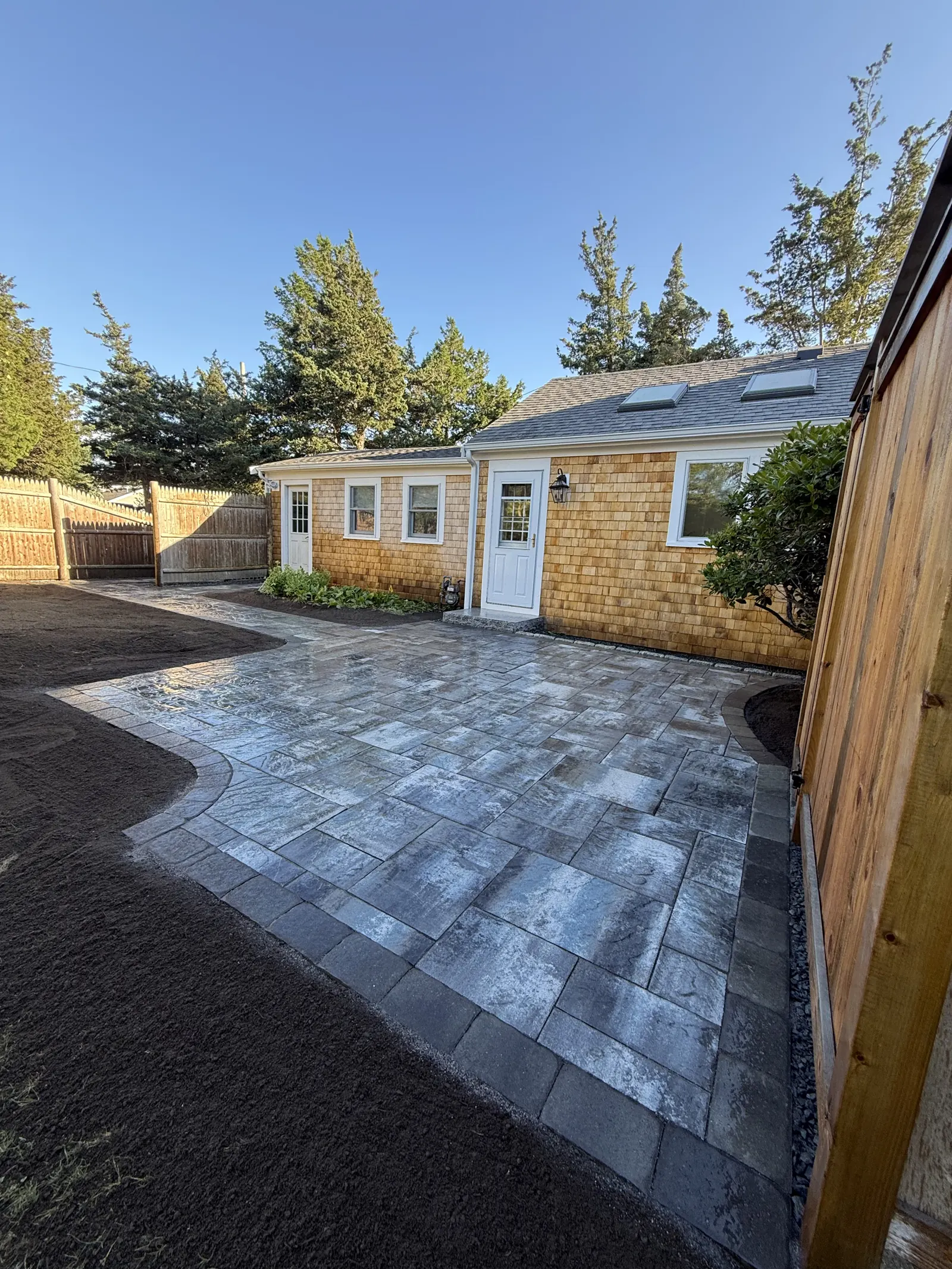
Gray paver patio with a curved edge behind a cedar shingle Cape home

Paver patios on Cape Cod

Good paver patio installation starts below the surface. The pavers sit on a compacted base, so the patio can handle frost and heavy summer use without cracking.

Pavers are also easy to repair. If one spot settles, the stones can be lifted and reset. Joints are filled with sand to lock the pattern in place. Borders and cobblestone edging let the patio match the house and the yard.
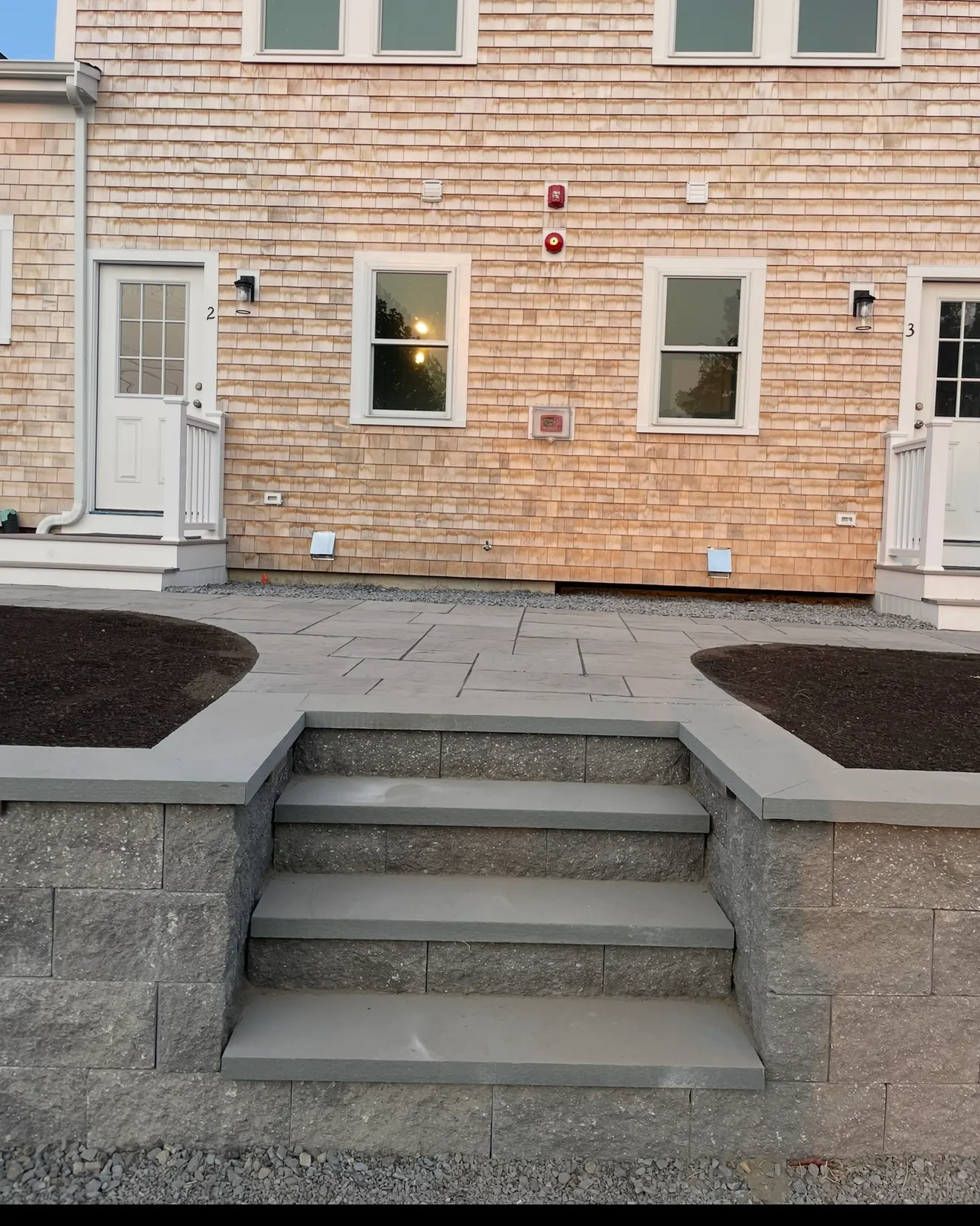
Raised stone patio with wide steps and a capped seat wall beside a cedar shingle house

Bluestone patios on Cape Cod

A bluestone patio is a flat natural stone surface with a classic look. No two pieces are the same, which gives the patio character.

Bluestone needs a solid, well-drained base just like pavers do. The stone is set with even joints and a slight slope so water runs off instead of pooling. Ice is the real test on the Cape, because water left in a joint freezes and pushes the stone.

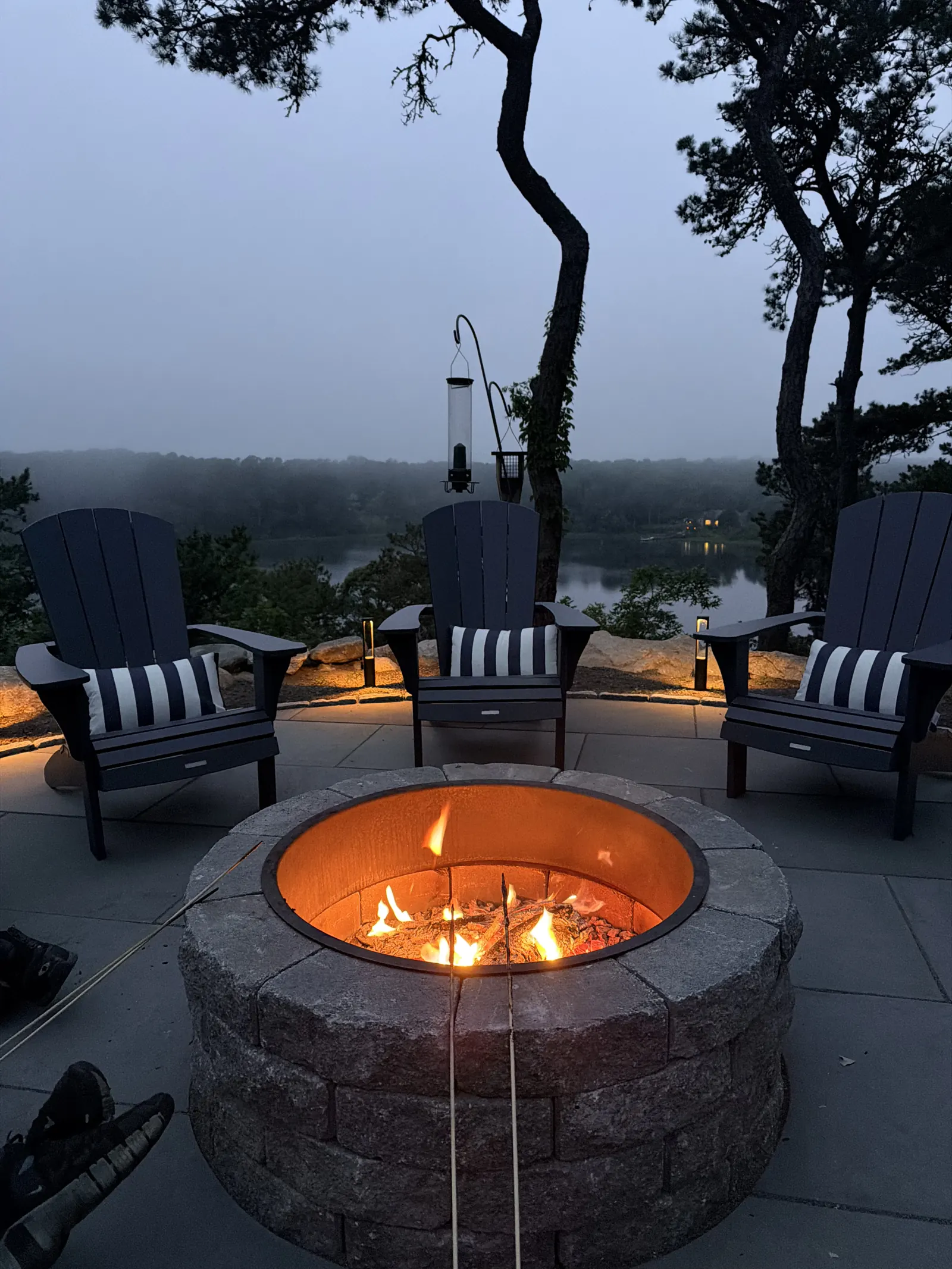
Stone fire pit glowing on a patio with Adirondack chairs and a water view at dusk

Patio fire pits on Cape Cod

A built-in patio fire pit gives the patio a center for cool evenings, which are common on the Cape well into fall.

The fire pit is built into the patio plan from the start, so the layout and base work together. It can match the patio stone or the house. Leave enough room around it for chairs, and plan it so smoke does not drift toward the house.

Light gray slab patio with a round fire pit and a lit seat wall at dusk

Seat walls and retaining walls on Cape Cod

Patio seat walls and retaining walls solve two problems at once. A seat wall gives extra seating without more furniture. A retaining wall holds back a slope so the patio can sit level.

Raised patios with stone steps and seat walls are one of the layouts Cape Cod Patio Pros builds. Walls need drainage behind them, or water builds up and pushes them out. Planning the water path first keeps the wall straight over time.

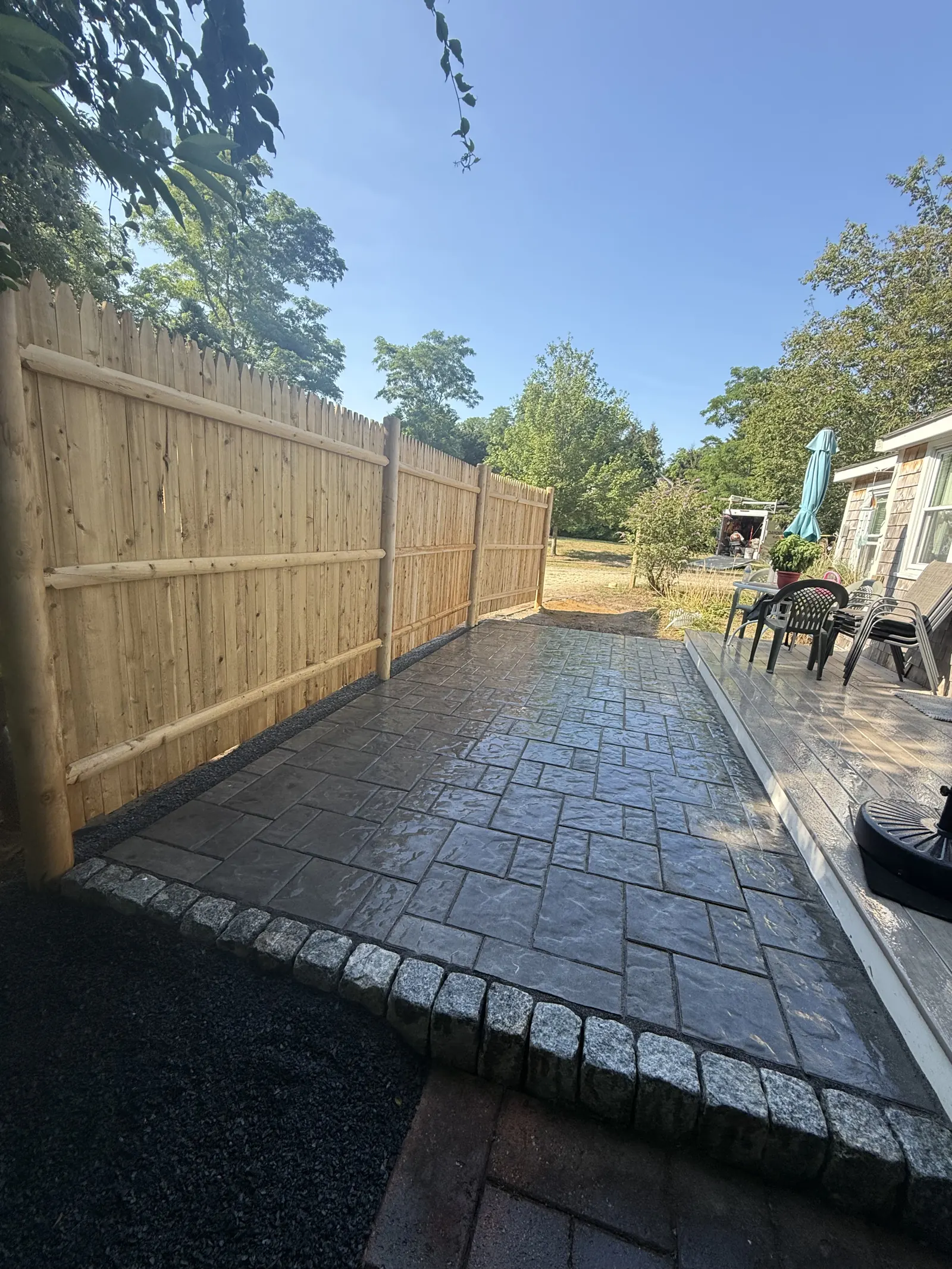
Gray paver walkway with cobblestone edging along a cedar fence

Patio steps and walkways on Cape Cod

A patio is only useful if you can get to it. Patio steps and walkway installation connects the patio to the house and the yard.

Steps need an even rise and a firm base, because frost finds weak spots. Paver walkways with cobblestone edging can tie into the patio so the space looks planned. Stone steps suit a raised patio and give it a finished edge.

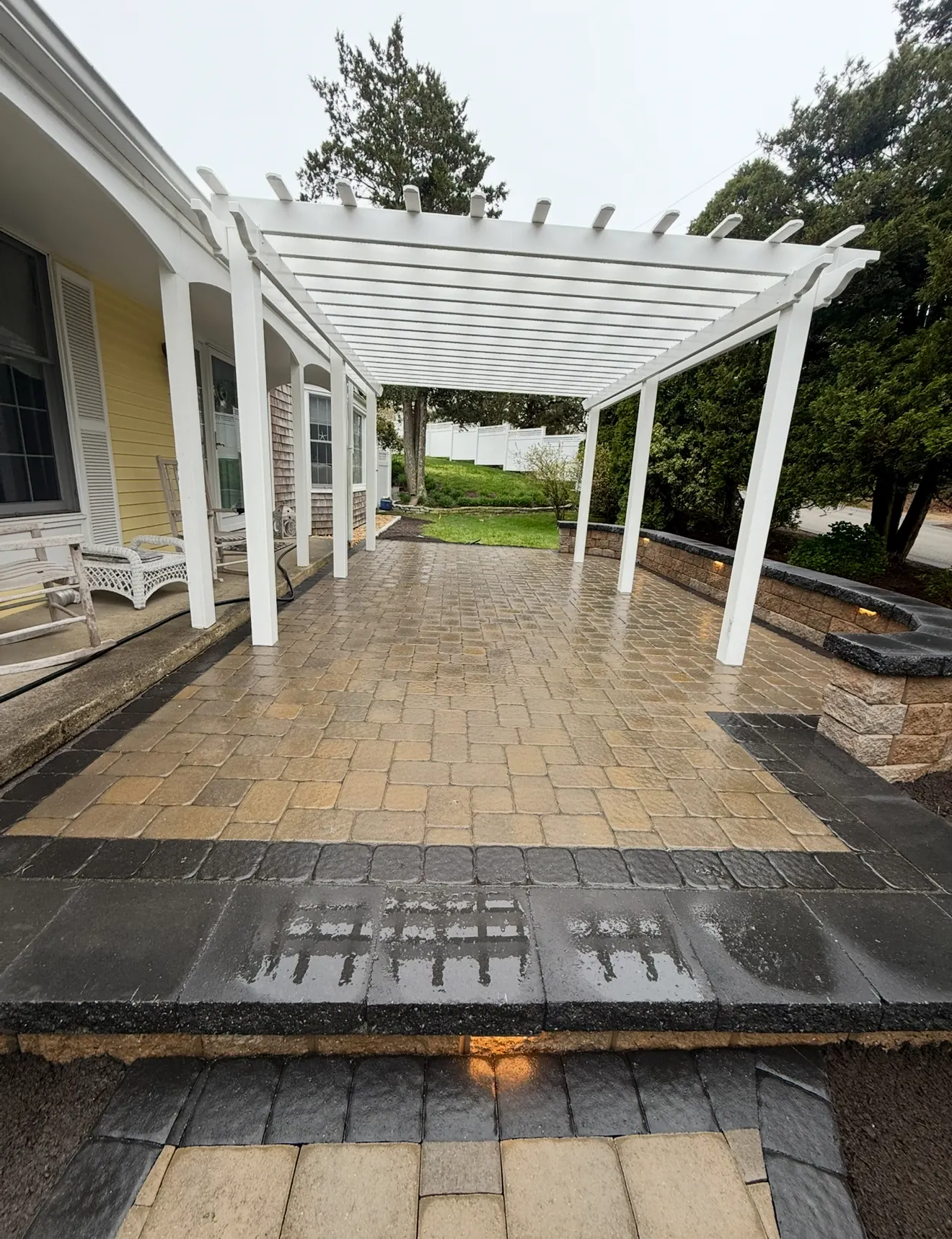
Paver patio with a charcoal border running under a white pergola beside a porch

Outdoor kitchens on Cape Cod

An outdoor kitchen installation adds a place to cook and host on the patio. It works best when it is planned with the patio from the start.

A masonry kitchen island is heavy, so the base under it matters. Grill placement and walking room need to fit the patio size. Tell us how you cook and how many people you usually host, and the layout can be sized to match.

01

Patio materials we work with: pavers and bluestone

Pavers are individual stones set in a pattern, with sand in the joints. That small amount of give helps the surface handle frost without cracking. If one spot settles, the stones can be lifted and reset. Pavers come in many shapes and colors, and borders or cobblestone edging are easy to add.

Bluestone is natural cut stone. The pieces are flat and fairly large, so there are fewer joints than on a paver patio. Each piece differs a little, which gives the patio a natural look. It suits traditional Cape homes, but it works with newer houses too. It still needs a solid base and a slight slope so water runs off.

Neither material is better in every yard. Pavers give you more pattern options and easier repairs. Bluestone gives you a natural, classic surface. Both depend on the same thing underneath: a compacted base and good drainage. At the estimate, you can compare both against your house and your budget.

02

How a patio project works

It starts with a free estimate. You can request a free estimate with the form or by calling (508) 348-7461. The estimate looks at the size and shape you want, the material, the slope of the yard and where water goes. Asking early helps, since many Cape homeowners want a finished patio before summer.

Next comes layout and excavation. The patio outline is marked on the ground, and the soft top layer of soil is dug out. The base goes in next, in compacted layers, with a slight slope away from the house so water drains. This step decides how long the patio lasts, so it should never be rushed.

Then the pavers or stone are set and cut to fit, and the joints are filled. Walls, steps or a fire pit are built as part of the same project, so the finished patio looks planned. The site is cleaned up at the end. If you want to know who does the work, read more about the crew.

03

Towns we build in on Cape Cod and Plymouth

Cape Cod Patio Pros is based in South Yarmouth and builds patios across Cape Cod and in Plymouth. That means the Upper Cape, the Mid Cape, the Lower Cape and the Outer Cape. Check the full list of towns we serve to see your town.

Conditions change from one part of the Cape to the next. Homes close to the water deal with more wind and salt, and wooded lots bring shade and roots. Each yard gets a plan that fits it. You can also browse all of our patio services to see what can be built along with the patio.

Questions

Common questions

How much does a patio cost on Cape Cod?

Patio cost depends on size, material, base work and yard access. A larger patio costs more than a small one, and bluestone and pavers price differently by style. Extras like seat walls, steps, a fire pit or drainage add to the scope. Sloped lots and tight access also change the work. A free estimate gives you a price for your specific project.

When is the best time to build a patio on Cape Cod?

Late spring through fall is the best time to build, but planning should start in winter. The ground needs to be workable and not frozen, and the base and joints go in best in dry, mild weather. Summer residents often want a patio ready before the season, so requesting an estimate early gives you more choice of dates.

Should I choose pavers or bluestone for my patio?

Choose pavers if you want more pattern and color options and easy repair, and bluestone if you want a natural, flat stone look. Pavers flex with the ground a little because of their sand joints. Bluestone has fewer joints and a more formal feel. Both last when the base is done right, so the best choice often comes down to the look of your house.

Do I need a permit to build a patio near water on Cape Cod?

It depends on your town and how close the site is to water, so check with your town first. Patios near wetlands, dunes, coastal banks or the shore may fall under the local conservation commission. Rules for size, setbacks and drainage also vary by town. Call your building department and conservation office early, because review can take time and should happen before work starts.

How long does a patio last on Cape Cod?

A well-built patio can last for many years, and the base is the main reason. Frost and wet springs punish thin bases and poor drainage. Pavers can be lifted and reset if a spot settles, and bluestone lasts when set on a solid base. Simple upkeep like sweeping and refilling joints also helps.

What happens at a patio estimate?

A free estimate covers what you want built and what your yard needs. Expect to talk about the size and shape, the material, how water moves across the site and how the crew will reach the work area. Walls, steps or a fire pit are added to the scope if you want them. Start with the form or call (508) 348-7461.

We build patios across the Upper, Mid, Lower and Outer Cape and in Plymouth. See every town we serve.

Light gray slab patio with a round fire pit and a lit seat wall at dusk

Ready to plan your patio?

Tell us what you want to build and get a free estimate. Use the estimate form or call (508) 348-7461.

Call (508) 348-7461