
How an outdoor kitchen is built, step by step
It starts with layout. The island goes where smoke drifts away from seating and doors, and where the cook can still talk with guests. Once the spot is marked, the area is excavated. A grill island with a stone counter is far heavier than the patio around it, so the ground under it needs more attention than a plain paver surface does. The base is built up in compacted layers, and the island gets its own footing under the walls.
Next, the walls are built in block and shaped around the grill, doors and drawers. Gas, electric and water lines are planned before the walls close up. Licensed trades handle the gas and electrical work, and the masonry is built around their rough-in so nothing has to be cut out later. Then the stone veneer or other finish goes on, the counters are set, and the grill is dropped in last.
Material and design options
Most masonry kitchens have a solid block core with a finished face. Stone veneer is a common choice because it looks natural next to a patio and does not rust or rot. Counters are a separate decision. Natural stone, porcelain and concrete all work outdoors, and each one handles heat, stains and sun a little differently. It is worth talking through at the estimate.
The shape of the island depends on how you cook and how many people usually gather. Common layouts include:
- A straight island with the grill in the middle and counter on both sides
- An L-shape that wraps a corner of the patio
- A grill island with a bar edge for seating
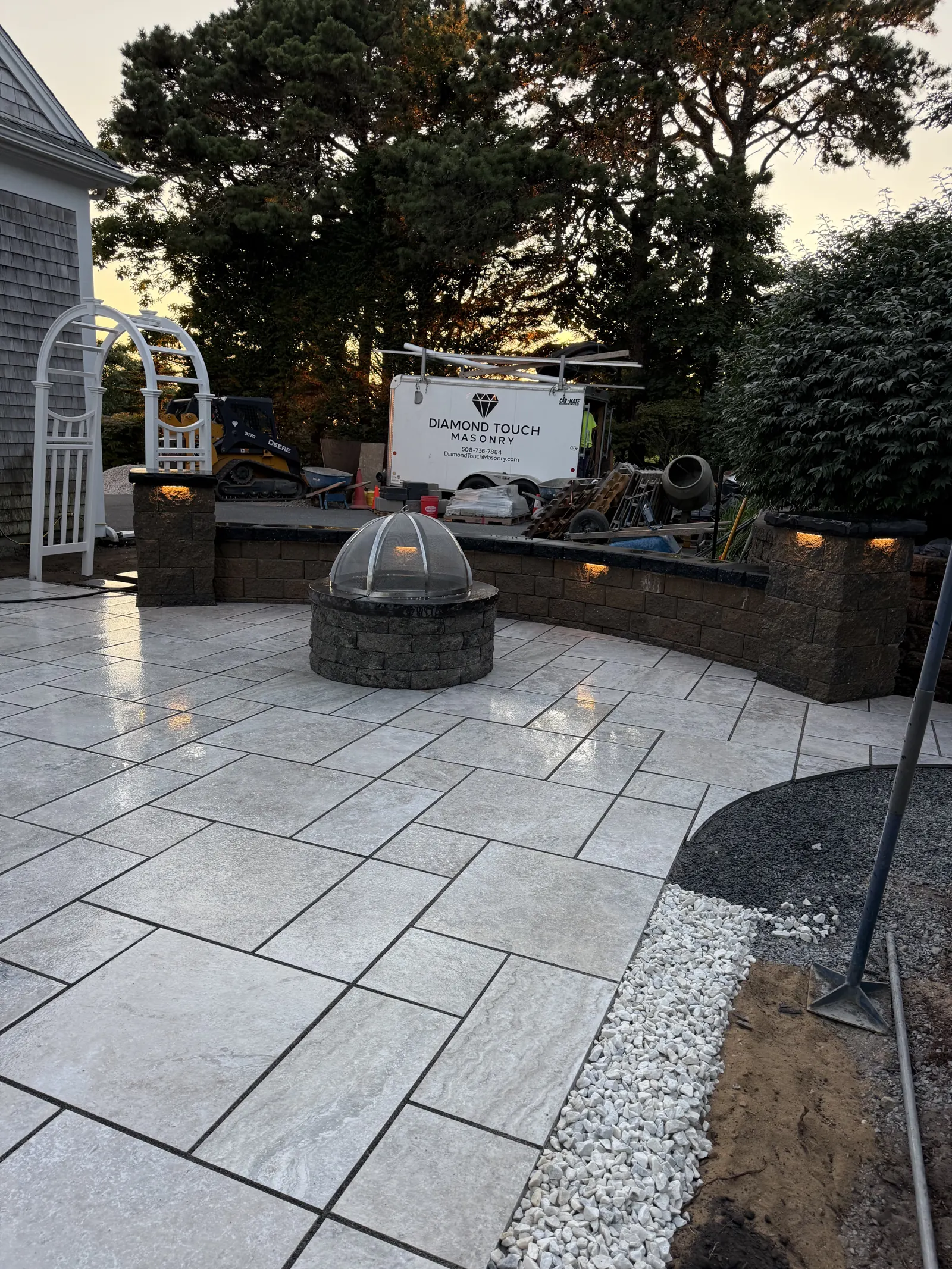
- A kitchen beside a seat wall or built-in fire pit so cooking and sitting share one area
What Cape Cod conditions mean for an outdoor kitchen
Salt air is the first thing to plan for. It eats at cheap metal, so masonry does the heavy lifting and any doors, hinges and drawer fronts should be chosen with coastal air in mind. Sandy soil drains well, but it shifts if it is not compacted properly, and the edges of a heavy island are where settling shows first.
Freeze and thaw is the other big one. Water that gets into joints, caps or block cores can freeze and push things apart over a winter. Good drainage around the island and a tight cap detail keep that water moving out. Wind matters too. It decides where the grill should sit so smoke and heat stay off the house and the seating.
Many Cape homes sit empty for months. Nobody is there to notice a small problem in February, so a kitchen at a seasonal home or rental should be built to need very little attention.
Keeping an outdoor kitchen in good shape
Upkeep is simple. Rinse off the salt film now and then, wipe the counters, and cover the grill when it is not in use. Natural stone may need sealing from time to time, depending on the type. Before the cold sets in, shut off and drain any water line so nothing freezes inside the island.
Each spring, look over the joints, the cap and the ground at the base. Small gaps are easy to fix early. Cape Cod Patio Pros also does power washing, which can freshen the patio around the kitchen after a long season.
How the kitchen fits with the rest of your patio
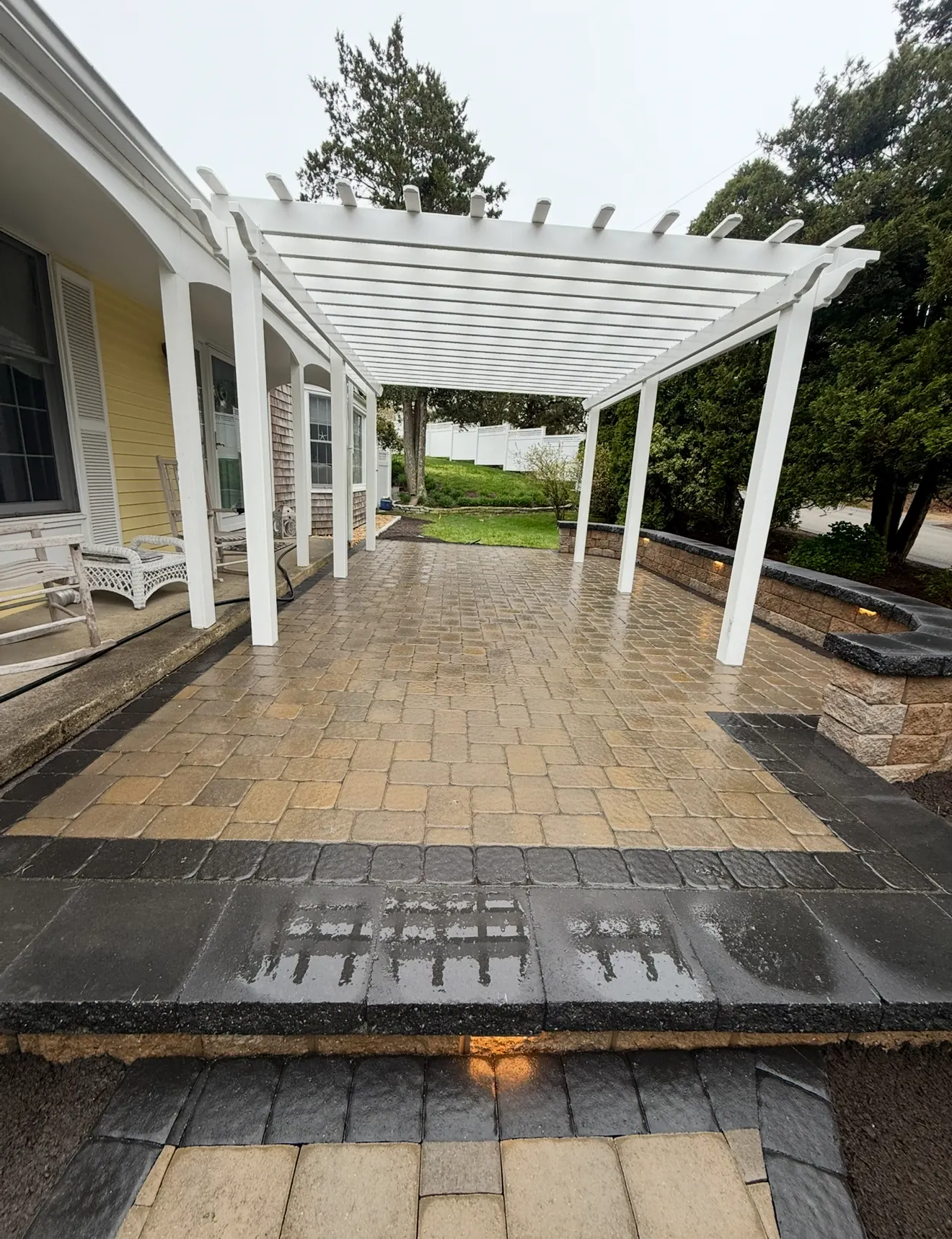
The surface around the kitchen matters as much as the island. A paver patio installation gives a flexible, repairable surface that works well under a grill island. A bluestone patio gives a flat natural stone look that pairs well with stone veneer.
Drainage and excavation often come up here, because the whole patio should shed water away from the kitchen. If you are starting from scratch, our Cape Cod patio installation overview shows how the pieces go together. You can also see the full list of patio services to decide what else belongs in the project.
Signs it is time to build or rebuild
You may be ready for a new kitchen if your grill sits on a cart that blows around or has outgrown its spot. You may need a rebuild if an existing island has cracks that keep returning, stone that has pulled loose, or rust stains running down the face. Water pooling at the base is another warning sign. So is a patio that has settled under the island and left it leaning.
Adding a kitchen to an older patio is often possible. The area under the island may need to be opened up and rebuilt so the new footing is solid.
What to expect from the estimate
The estimate starts with your yard and how you cook. Tell Cape Cod Patio Pros what you want to grill, how many people you usually feed, and whether you need seating nearby. Photos of the space help. Free estimates are available through the website form or by calling (508) 348-7461.
If you want the kitchen ready for summer, ask early. The base and utility work take planning, and it is better to settle the layout well before the season starts.