
How a paver patio is built, step by step
The work starts with digging out sod and topsoil. These rot and settle, and a patio set on them sinks. The soil underneath is leveled and packed, and soft spots are fixed before any stone goes in.
Next comes the base, made of crushed stone. It goes down in thin layers, and each layer is packed with a plate compactor before the next one is added. Packing in layers is what gives the base its strength. One thick pile packed once only firms up at the top. The depth depends on the use and the ground. A seating area needs less than a spot that holds a car, and soft ground needs more.
A thin layer of bedding sand is screeded flat on top of the base. The pavers are then set by hand in the chosen pattern, and the edges are cut to fit. The whole surface is compacted again so every paver seats evenly.
Edge restraint comes after that. It is a firm border that keeps the outer pavers from creeping outward, which is how joints open up over time. Last, polymeric sand is swept into the joints and wet down. It hardens slightly. That locks the pavers together and helps keep weeds out.
Paver styles, patterns and borders
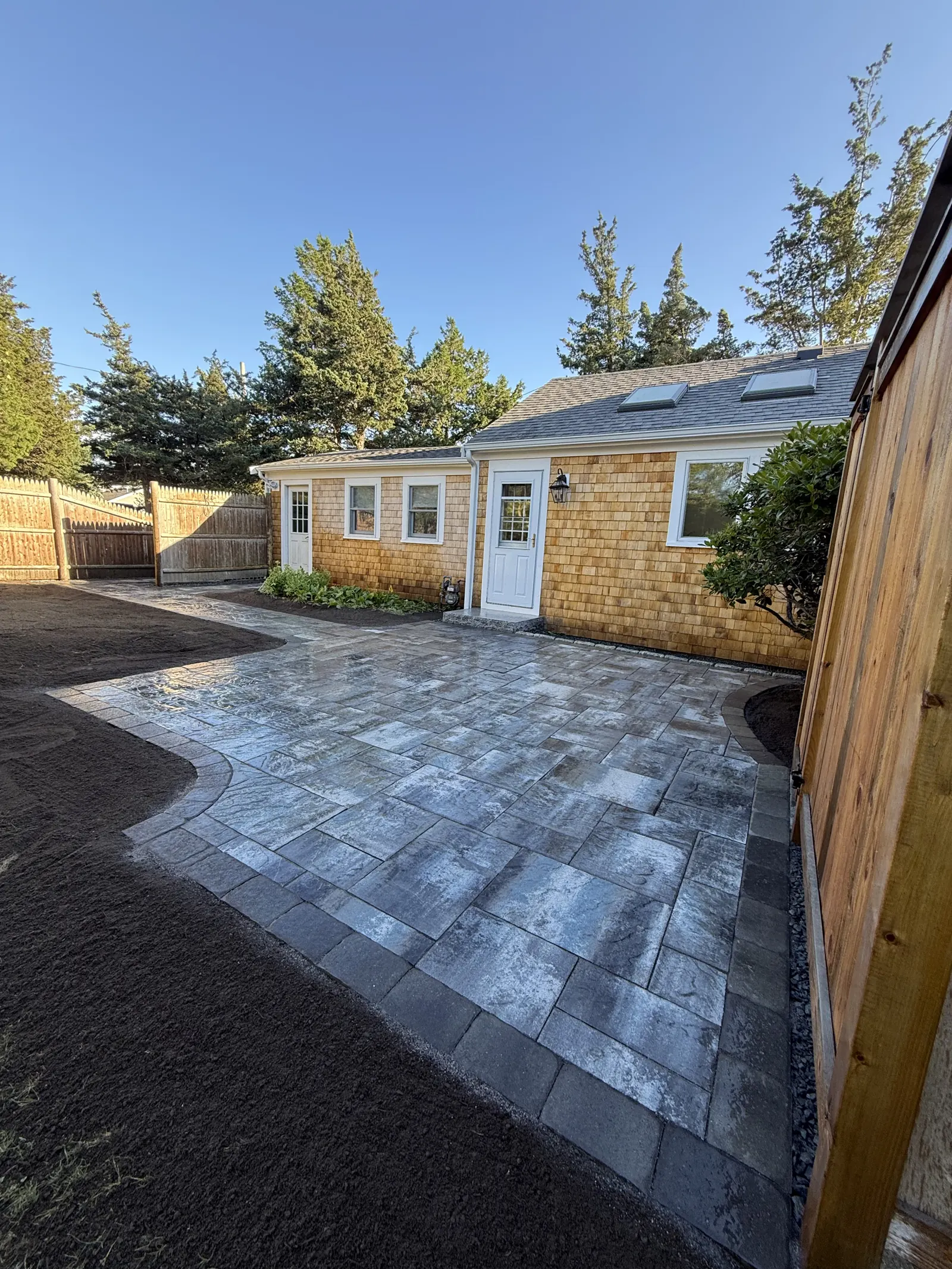
Concrete pavers come in many sizes and colors, so the patio can match the house. The laying pattern changes both the look and the strength. Running bond is clean and simple. Herringbone locks tightly and handles foot traffic and heavy furniture well.
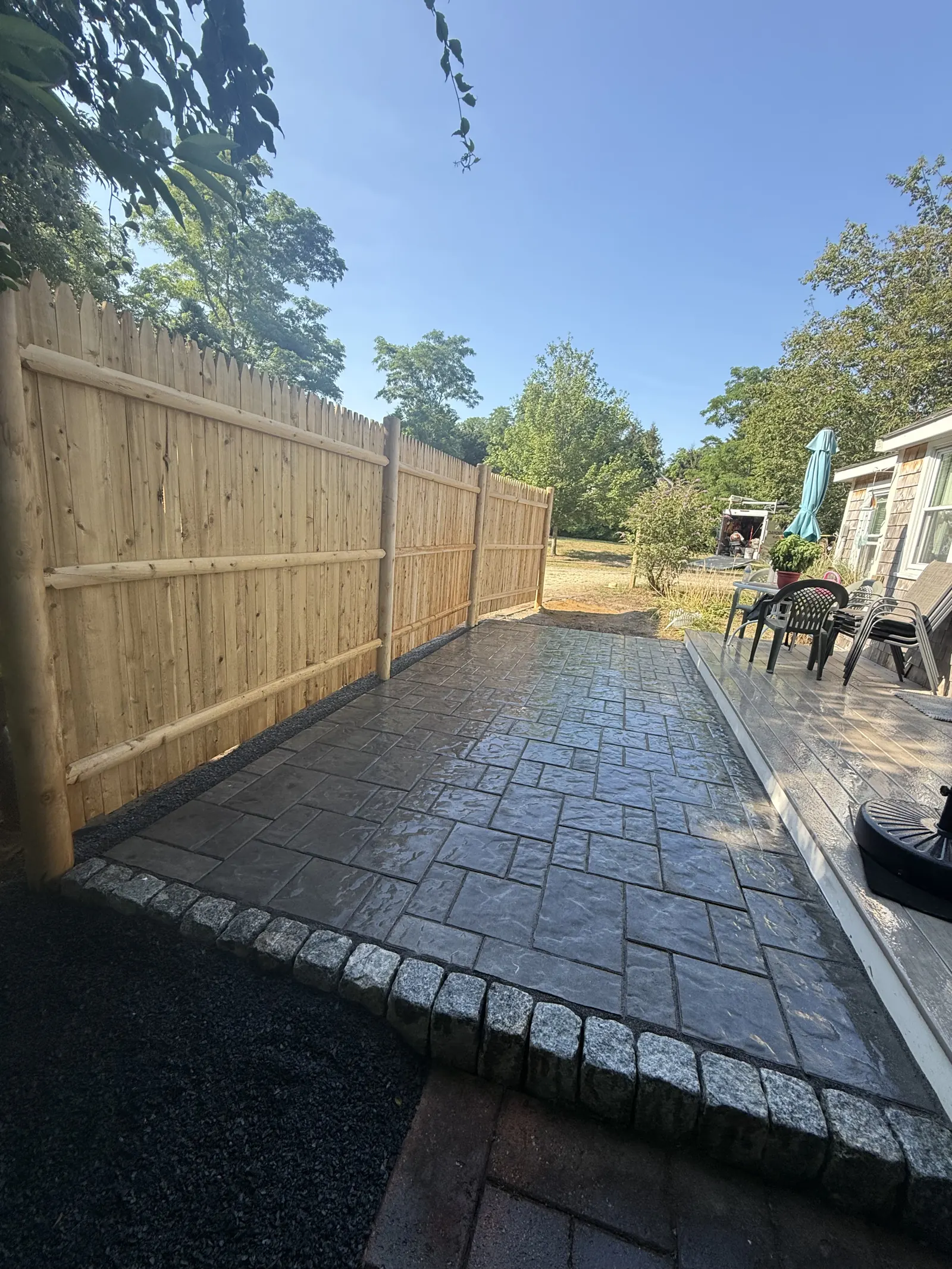
A border in a contrasting color frames the patio and gives the edge a finished line. Inlays can break up a large surface. Cape Cod Patio Pros project photos show paver patios, raised patios with stone steps and seat walls, and walkways with cobblestone edging, so borders and edge details are a normal part of the plan.
What Cape Cod conditions ask of a paver patio
Sandy soil drains fast, which helps. But loose sand moves under load, so the base has to be packed well and held in by solid edges. Water still needs a path out, so the patio is sloped away from the house and the base is built to drain.
Frost is the main test. Water that sits in a weak base freezes and pushes pavers up. A well-drained, well-packed base gives that water little room to work. Because pavers are separate units, the surface can move slightly with the ground instead of cracking.
Salt air is hard on metal and wood, but concrete pavers handle it well. De-icing salt is a bigger risk, so keep rock salt off the surface. Wind and heavy rain can wash loose sand out of joints, which is why polymeric sand is used. If the house sits empty part of the year, a low-upkeep surface helps. Where the ground needs work first, Cape Cod Patio Pros also handles drainage and excavation.
Maintaining a paver patio
Paver patios need little care, but a few yearly habits keep them tight.
Sealing is optional. It can deepen the color and make stains easier to clean. If you seal, plan to redo it over time.
- Sweep leaves and dirt off so moisture and weeds do not take hold.
- Pull weeds early and top up joint sand where it has worn low.
- Use a plastic shovel in winter and keep rock salt off the surface.
- Power wash gently, then re-sand the joints afterward.
Pairing pavers with other patio features
Most patios are more than a flat surface. A built-in fire pit gives the space a center, and seat walls add seating without more furniture. See our page on patio fire pit installation for how that works. Some homeowners also pair pavers with bluestone patio installation for a landing or a second area, since natural stone looks different next to a uniform paver field.
Retaining walls, steps and walkways can tie a sloped yard together so the patio sits level. Browse the full list of patio services or the overview of Cape Cod patio installation to plan the whole project at once.
Signs it is time to rebuild or add a paver patio
Pavers that rock underfoot or sink in spots point to a weak base. Puddles that stay after rain mean the slope or drainage is off. Joints that keep opening and edge pavers drifting outward suggest the edge restraint failed. Frost heave shows up as raised, uneven rows.
In many rebuilds, the pavers are lifted, the base is fixed and the same pavers are relaid. That depends on their condition. An old cracked concrete slab or a bare yard is also a good reason to add a new paver patio. Fixing the base is the step that keeps the problem from returning.
What to expect from the estimate
Estimates are free. Use the form on this site or call (508) 348-7461. The visit centers on your yard: its size, its slope, how water moves across it, how equipment can get in and how you plan to use the space.
Come with a few photos and a rough idea of the size. Think about the pattern, the border and any extras like seat walls or a fire pit. Every yard is different, so the scope comes from the site, not from a standard package.