
How a bluestone patio is built, step by step
A bluestone patio is only as good as what sits under it. The work starts with layout. We mark the shape, decide the finished height and plan a slight slope so rain runs away from the house and off the stone. Then the grass and topsoil come out to make room for the base.
The base is crushed stone, spread and compacted in layers. On Cape Cod this step matters a great deal. Sandy soil drains well, but it shifts if it is not packed tight and held in place at the edges. A firm base keeps the stones level through every freeze and thaw.
From there the build splits in two. For a dry-laid patio, a leveling bed of stone dust goes over the base, each stone is set and checked, and the joints are filled and swept. For a mortar-set patio, a concrete slab goes in over the base first, then the stone is set in mortar and the joints are grouted. Either way, the last step is a clean surface and a look at how water moves across it.
Stone choices and how it is set
For a patio, the choices that matter are surface finish, color range and the way the stone is set.
Thermal bluestone has its surface flamed to a flat, slightly rough texture. The thickness is even and the pieces are cut to size, so the patio looks tidy and tables sit steady. Natural cleft stone is split along its natural layers. It has more texture, more variation and a little more wobble under chair legs. Thermal fits clean, formal layouts. Natural cleft fits a looser, rustic look.
Color is the next choice. Full-color bluestone mixes blue-gray with warm tones such as rust and brown. Blue-select is sorted for a tighter blue-gray range and a calmer, more even look. Neither is better. Full-color looks more natural and hides dirt well. Blue-select looks more uniform.
Then comes the setting method. Dry-laid bluestone on stone dust gives a little when the ground moves. Frost heave and settling show up as small shifts, not cracks, and one stone can be lifted and reset later. That makes dry-laid a good fit for most ground-level patios. Mortar-set bluestone sits on a concrete slab. The joints are tight and the surface feels solid, which suits steps, raised patios and high-use areas. The tradeoff is rigidity. If water gets under the stone or the slab moves, mortar can crack, so drainage and the base under the slab do most of the work.
What Cape Cod weather does to bluestone
Salt air is hard on metal and some man-made surfaces, but bluestone is natural stone and handles it well. Coastal spray can leave a film, so an occasional rinse with a hose is enough. Skip rock salt and ice melters in winter. They can flake the surface and wear out the joints.
Freeze-thaw is the bigger test. Water that sits in the base or the joints expands when it freezes and pushes stones out of place. That is why drainage and base work get so much attention. Water needs a way out, both across the surface and down through the base.
Summer sun is the other issue. Darker bluestone absorbs heat and can feel hot on bare feet in the afternoon. Lighter blue-gray tones run a bit cooler, and shade from an umbrella or a nearby tree helps most. Wind matters too. Many Cape patios are open and exposed, so umbrellas and light furniture need weight.
Many Cape homes also sit empty through the winter. Nobody shovels and nobody checks the patio. A bluestone patio built with good drainage does not need that attention, which is the point for seasonal owners and rental properties. If you want it ready for summer, ask for an estimate before the season fills up.
Keeping bluestone looking good
Maintenance is light. Sweep the patio often and rinse it with a hose. Leaves left sitting on the stone can leave stains, especially after rain. For deeper dirt, power washing works, and Cape Cod Patio Pros also offers it. High pressure can blast out joint material, though, so joints may need to be refilled afterward.
Dry-laid joints may need topping up now and then. Some owners seal bluestone to deepen the color and resist stains. It is optional, and a sealer wears off and needs to be redone. After winter, walk the patio and look for low spots, loose stones or joints that washed out.
Pairing bluestone with granite steps and other features
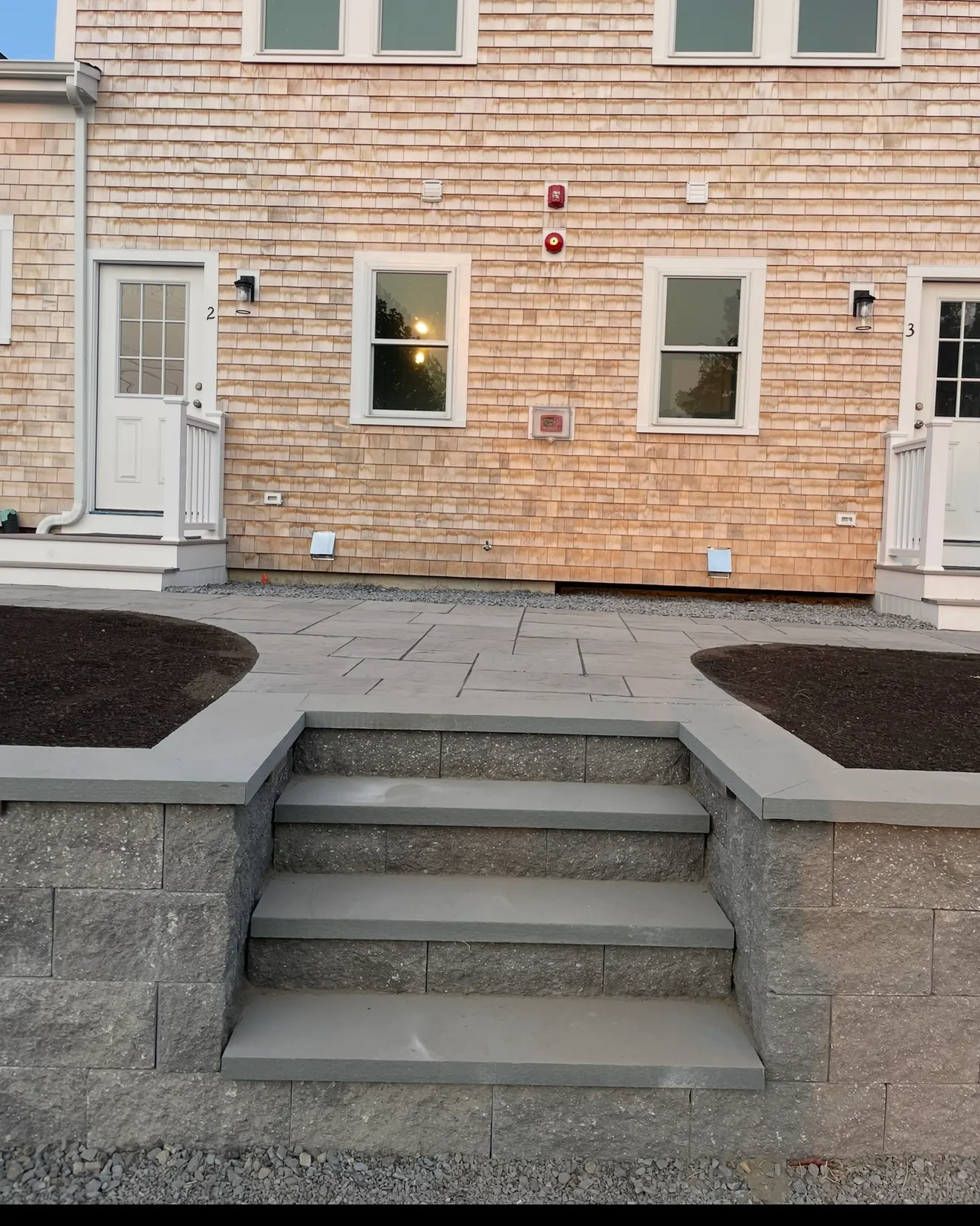
Bluestone and granite work well together. Granite treads are a common choice on steps because they give a strong, square edge that shows little wear. The gray tones sit comfortably beside blue-gray patio stone. Cape Cod Patio Pros builds stairs, walkways and retaining walls, so a raised patio, its steps and a seat wall can be planned as one project.
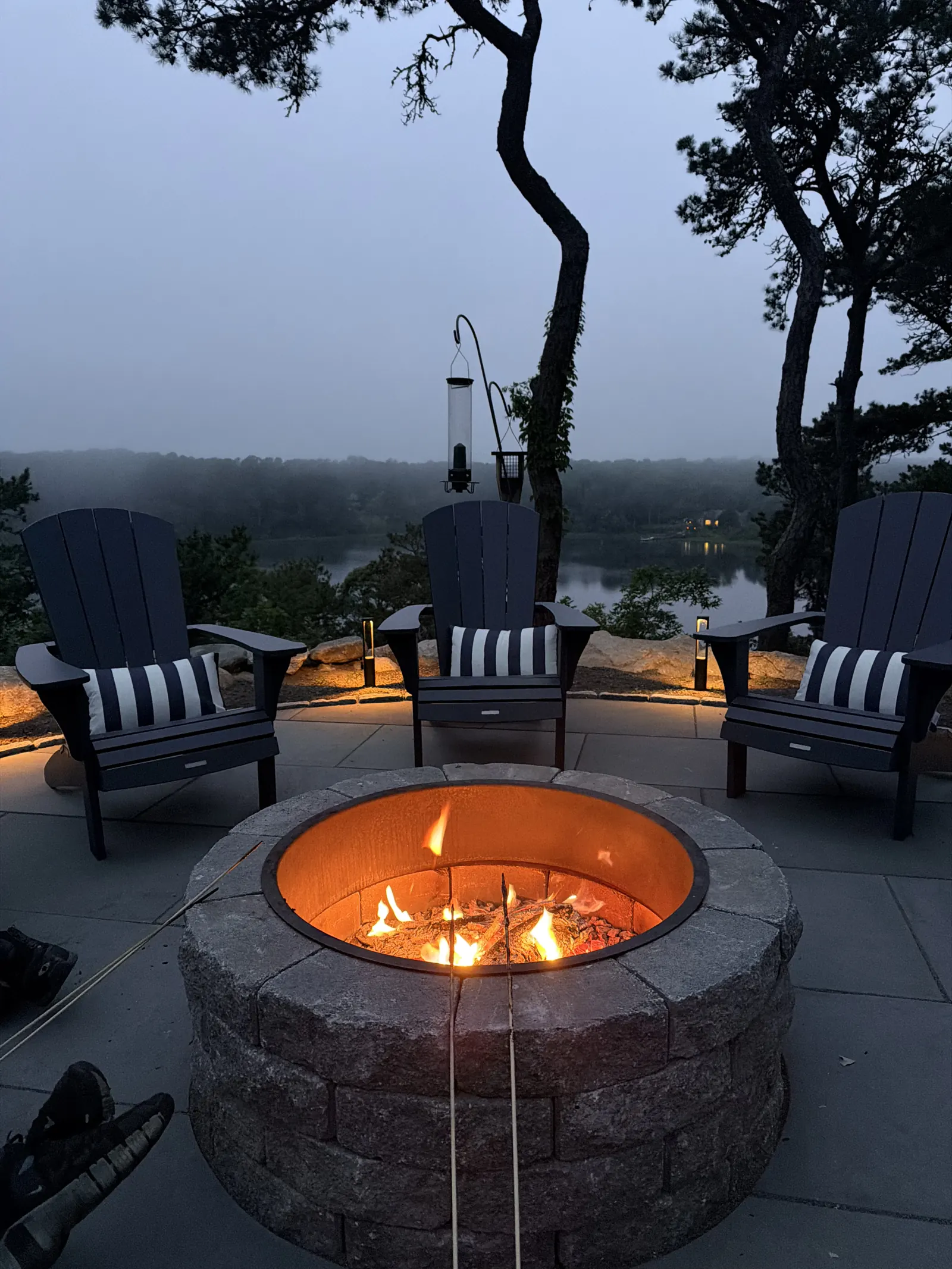
A built-in fire pit is a natural addition to a stone patio. See patio fire pit installation for how that fits into a layout. If you are still deciding on material, paver patio installation on Cape Cod covers the other main option. You can also browse all patio services or read the Cape Cod patio installation overview.
Signs it is time to rebuild or add a bluestone patio
Most bluestone problems start below the stone. If you see any of the signs below, the base is likely the cause, and new stone on the same base will fail again.
- Stones that rock, tilt or have sunk in spots
- Water pooling on the patio or running toward the house
- Cracked mortar joints or stones that sound hollow
- Joints that wash out after heavy rain
- Edges that heaved up over the winter
What to expect from the estimate
Estimates are free. You can use the form on this site or call (508) 348-7461. It helps to share the rough size, whether you want steps or a wall, how the yard drains now and how you use the space. You will also talk through finish, color and whether dry-laid or mortar-set fits the site.
Price depends on those choices, along with access to the yard and the amount of base work. That is why no honest number can be given before the details are known. In some cases the old stone can be lifted and reset on a new base, and that is worth asking about.