
How patio steps and walkways are built
The work starts with layout. The path is marked from the driveway to the door and on to the patio. The finished height is set so water runs away from the house, not toward it. Then the soil is dug out and soft or organic material is removed. Crushed stone goes in as a base, in layers, and each layer is compacted before the next one. A thin bedding layer sits on top. Pavers or stone are set and cut to fit, the edges are locked in, and the joints are filled and compacted last.
Steps follow the same order with one strict rule. Every riser, the vertical face, must be the same height. Every tread, the part you step on, must be the same depth. People trip on uneven steps even when the difference is small. Every step needs the same rise and the same tread depth, and keeping them consistent matters more than any detail of style.
Material and design options
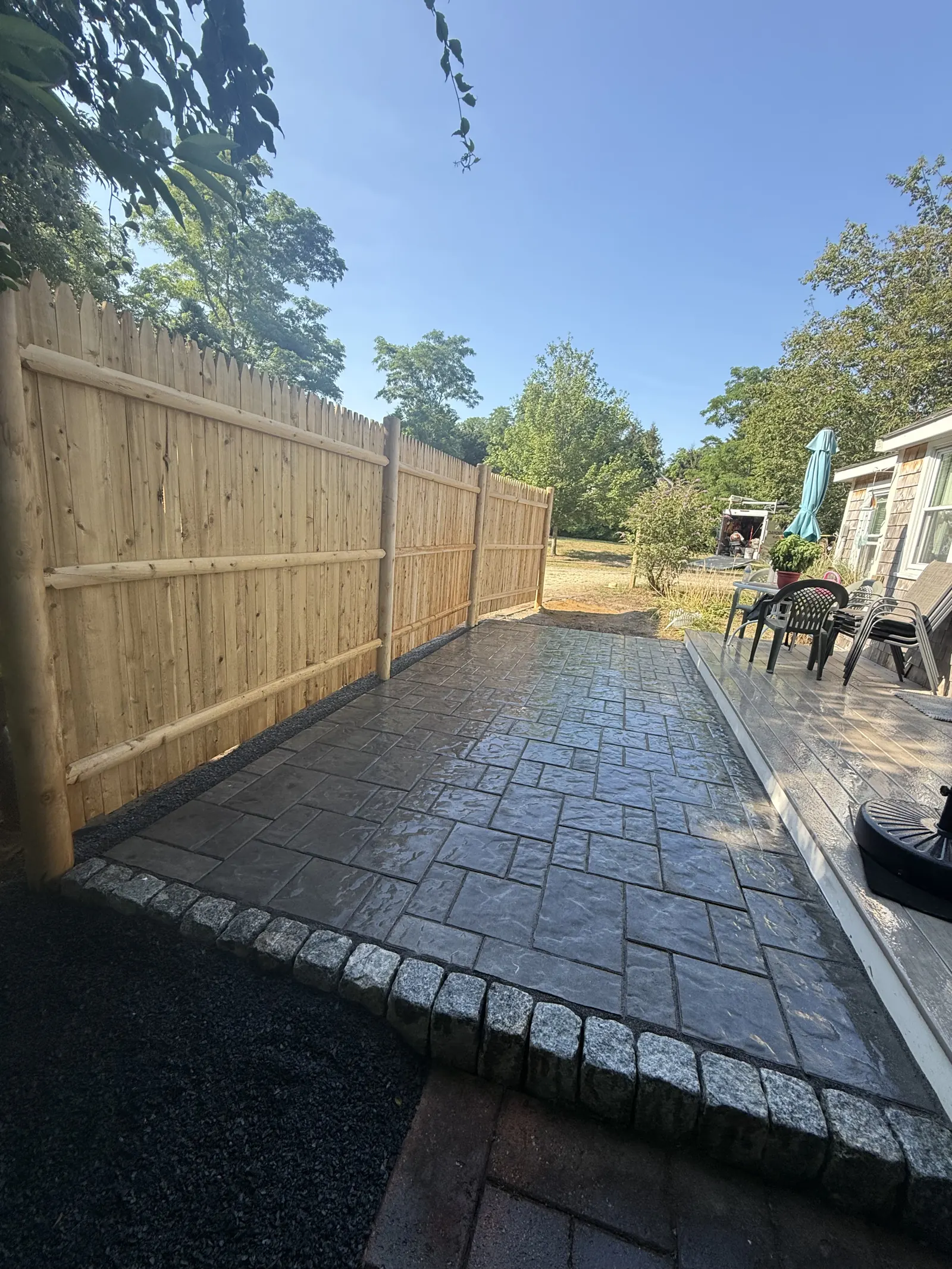
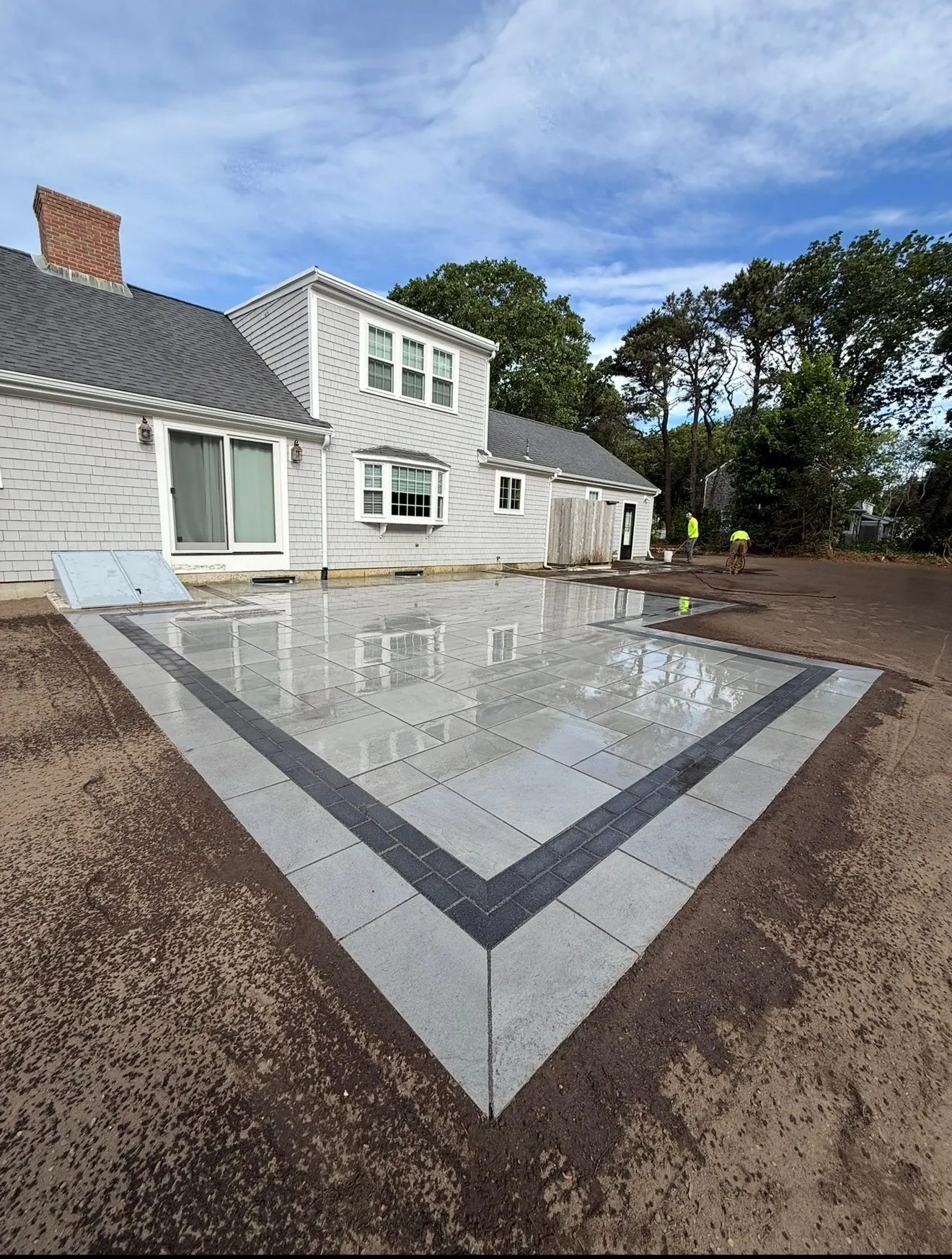
A walkway can be built from the same material as the patio, which keeps the whole yard looking planned. Interlocking pavers are a common choice because they handle small shifts in the ground and can be lifted and reset if needed. Bluestone gives a flat, natural look. Large-format porcelain works where a clean, modern line is the goal. A contrasting border or inlay can mark where the walk meets the patio.
Edges matter as much as the surface. Cobblestone edging frames a paver walkway and holds the outer pavers in place, which helps in loose sandy soil. Stone steps and seat walls on a raised patio can be built to match, so the steps look like part of the patio and not an afterthought. Choose a surface with some texture, because smooth stone gets slick when wet or frosty.
Cape Cod conditions that shape the design
Sandy soil drains well, which helps. But sand also moves. Without firm edges and a well-compacted base, a walk can slowly spread, dip or rock underfoot. Freeze-thaw is the other stress. Water that gets under or between pavers freezes, expands and pushes the surface up. The fix is good drainage and a base that does not hold water. A slight pitch across the walk, usually away from the house, sends rain off the surface instead of into the joints.
Salt air and winter de-icing products are hard on some surfaces, so dense materials and clean joints help. Wind drives sand and leaves onto paths, and a walk that sheds water also sheds debris more easily. Many Cape homes sit empty for part of the year. A step that heaves in January may go unnoticed until guests arrive in June, so the build has to hold up without regular attention.
Keeping walkways and steps in good shape
Maintenance is light. Sweep the surface and refill joint sand when it washes out, since full joints keep the pavers locked together. Keep gutters, downspouts and nearby drains clear so water does not pool on the walk. Rinse off salt residue in spring. Power washing can brighten a dull surface, but a hard blast can strip joint sand, so plan to refill it afterward. If a step starts to feel loose, fix it early, before the base underneath washes out.
How steps and walkways fit the rest of your patio project
Walkways and steps work best when they are planned with the patio, not added later. If you are building new, the paver patio installation and the bluestone patio options both set the height and material that the walk and steps should match. Drainage and grading come first, because the pitch of the patio decides where water goes. Seat walls and built-in fire pits also affect where the path should run.
You can see the full range of work on the patio and hardscape services page, or start from the Cape Cod patio installation overview. If you only need a new walk or a set of steps, that is fine too.
Signs it is time to rebuild or add steps
Some problems are easy to spot. Others show up slowly. These are the signs that most often mean the base has failed or the layout no longer works:
Patching a small area can work if the base is sound. When the sinking keeps coming back, the base is the problem, and the section needs to be taken up and rebuilt.
- Pavers or stone that rock or dip, or gaps wide enough to catch a heel
- Steps with uneven risers, or a top step that has pulled away from the door or patio
- Water that pools on the walk or runs toward the foundation
- Weeds coming up through joints because the sand has washed out
- A worn path across the lawn where people already walk, which shows where the walk should go
What to expect from the estimate
Cape Cod Patio Pros offers free estimates through the website form or by phone at (508) 348-7461. It helps to share where the walk should start and end, what the patio is made of, and any spot where water collects. Photos of the area are useful. Grade, access for equipment and the material you want to match shape the scope more than almost anything else. Because the estimate is free, you can compare options before you commit. If you want the work finished before summer, ask early about timing.